

This blog post was developed from information shared during our webinar, Meeting Resistance to Care with Compassion.
If you care for someone living with dementia, chances are you’ve heard the word “no” more times than you can count. No to bathing. No to doctor visits. No to activities they once loved. These moments can feel deeply personal, even painful—but they are not a reflection of your relationship or your caregiving abilities.
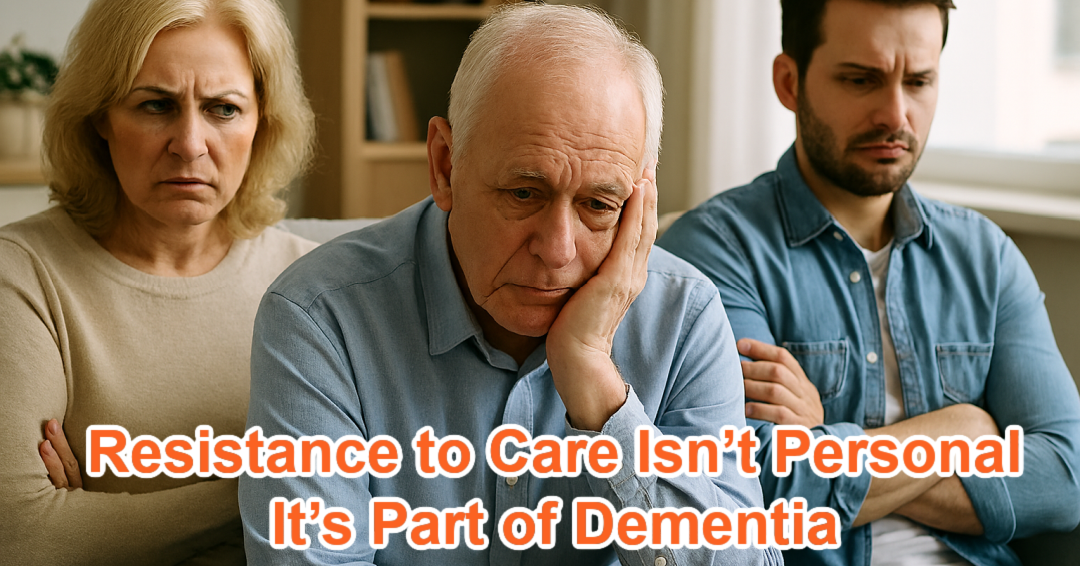
Resistance to care is a recognized medical symptom of dementia, not stubbornness or willful behavior. Understanding this distinction can completely change how caregivers experience—and respond to—these challenging moments.
Resistance to care includes any behavior that interferes with necessary assistance. It may look passive, such as turning away or refusing to engage, or active, such as pushing, yelling, or becoming physically agitated. While these behaviors can be frightening or frustrating, they are rooted in the neurological changes caused by dementia.
Research shows that up to 90% of people living with dementia experience behavioral and psychological symptoms, including resistance to care. These symptoms significantly increase caregiver stress and are a leading cause of early long-term care placement. When families don’t have the language or education to understand what’s happening, they often blame themselves—or worse, their loved one.
One of the most painful aspects of resistance to care is how it disrupts daily life. Caregivers may feel stuck, unable to help their loved one attend medical appointments, participate in social activities, or accept support services that would benefit both of them. Over time, this can lead to isolation, burnout, and strained relationships.
Organizations like Skylark Senior Care work with families every day who are facing these exact challenges. One of the most important messages they share is that you are not failing. Dementia changes how the brain processes information, perceives reality, and responds to stress. The person you love may not understand what you’re asking, may feel threatened by help, or may be trying desperately to hold on to a sense of control.
Acknowledging resistance to care as a symptom—rather than a personal rejection—creates space for compassion. It allows caregivers to step back, breathe, and respond thoughtfully instead of reacting emotionally. Education is the first and most powerful tool caregivers can have. When you know what you’re dealing with, you can plan, adapt, and protect both your loved one’s dignity and your own well-being.
Resistance to care is common. It is painful. And it is manageable—with understanding, patience, and the right support systems in place.

