

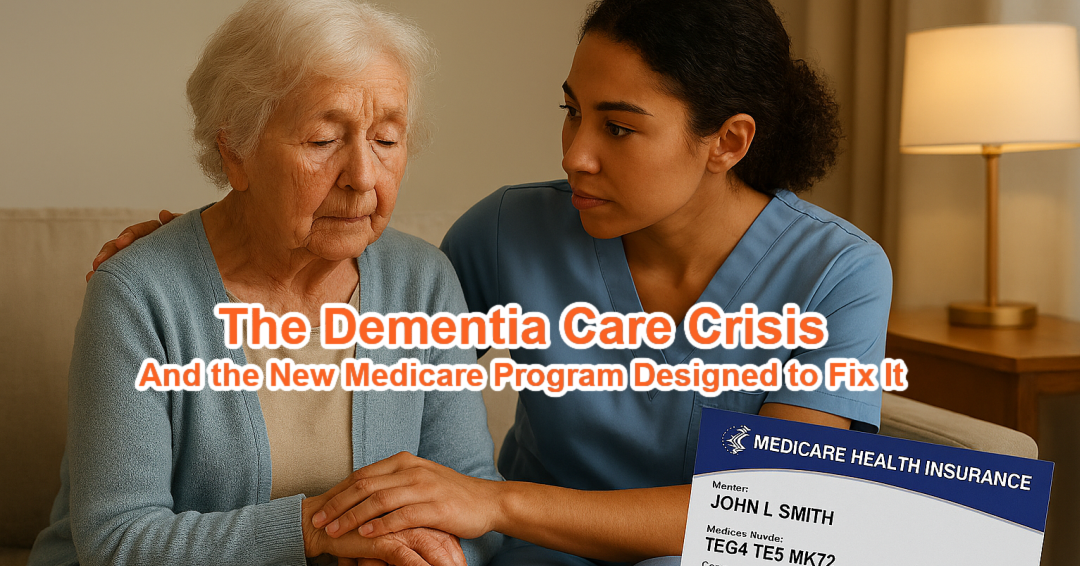
If you’ve ever cared for someone with dementia, you already know: the system is not built for you.
Families across the country are navigating a healthcare maze that feels fragmented, confusing, and emotionally exhausting. There are primary care physicians, neurologists, home care agencies, adult day centers, therapists, and hospital systems — yet very little coordination between them. For caregivers, that often means being the unofficial case manager, advocate, scheduler, and crisis responder all at once.
It’s no surprise that in surveys conducted by the Alzheimer's Association, caregivers frequently report feeling overwhelmed. Surprisingly, one of the most common emotions expressed isn’t sadness — it’s anger. Anger at a system that feels unsupported. Anger at long waitlists for specialists. Anger at the lack of guidance after receiving a life-changing diagnosis.
And that’s just the emotional cost.
The Financial and Clinical Impact
Dementia is one of the most expensive chronic conditions in the Medicare population. When care isn’t coordinated, small problems escalate into emergency room visits. Missed follow-ups turn into hospitalizations. Caregiver burnout often leads to premature nursing home placement.
From Medicare’s perspective, dementia creates two serious challenges: poor quality outcomes for patients and a high total cost of care. When those two issues combine, they place enormous pressure on both families and the healthcare system. That combination made dementia a clear priority for innovation.
Enter the GUIDE Model
To address this crisis, the Centers for Medicare & Medicaid Services (CMS) created the Guiding an Improved Dementia Experience (GUIDE) Model through its Innovation Center.
This is an eight-year national initiative designed to test a new, comprehensive dementia care standard.
The goals of the GUIDE Model are straightforward but powerful. It aims to improve quality of life for people living with dementia while simultaneously reducing the burden placed on caregivers. It also seeks to lower unnecessary hospitalizations and reduce overall Medicare spending by preventing avoidable crises before they happen.
The strategy behind the model is coordinated, proactive, wraparound dementia care delivered primarily through telehealth. By leveraging virtual care, the program ensures access across the country, including rural and underserved communities where dementia specialists may be limited.
Why This Matters to Families
For families, this represents something rare in healthcare: meaningful support without additional cost.
The GUIDE Model is available to eligible beneficiaries enrolled in traditional Medicare, not Medicare Advantage. For those who qualify, there are no copays, no deductibles, and no coinsurance. Participation in the program does not reduce or interfere with any existing Medicare benefits.
The model is specifically designed to help individuals remain safely at home, which is where most people living with dementia prefer to be. It recognizes that caregiver strain is one of the biggest drivers of crisis-based care. When caregivers are supported, educated, and connected to resources, they are less likely to experience burnout. As a result, their loved ones are less likely to require emergency room visits or premature long-term care placement.
A Shift in Dementia Care
For decades, dementia care has been reactive. A crisis occurs, and then the healthcare system responds.
The GUIDE Model flips that approach by focusing on proactive stability. It emphasizes early diagnosis and can even help establish a diagnosis when one has not yet been formally made. It provides ongoing care coordination to ensure that all providers are aligned. Participants receive monthly monitoring and structured follow-up to catch concerns early. Medication reviews are conducted to reduce complications and side effects. Caregivers receive education and guidance tailored to the stage of dementia. In addition, families gain access to 24/7 support so they are not left alone when urgent questions arise.
The aim is stability rather than crisis.
Although the program remains in its testing phase, early results show reductions in unnecessary hospital visits. Simply giving families access to a knowledgeable support team before emergencies escalate has already begun to change outcomes.
A New Level of Hope
Dementia is progressive. That reality has not changed.
What is changing is how families are supported along the journey.
Instead of navigating a fragmented system alone, families now have access to a structured, no-cost, coordinated care model built specifically around dementia. For caregivers who once felt invisible and unsupported, that shift may prove to be the most important outcome of all.