

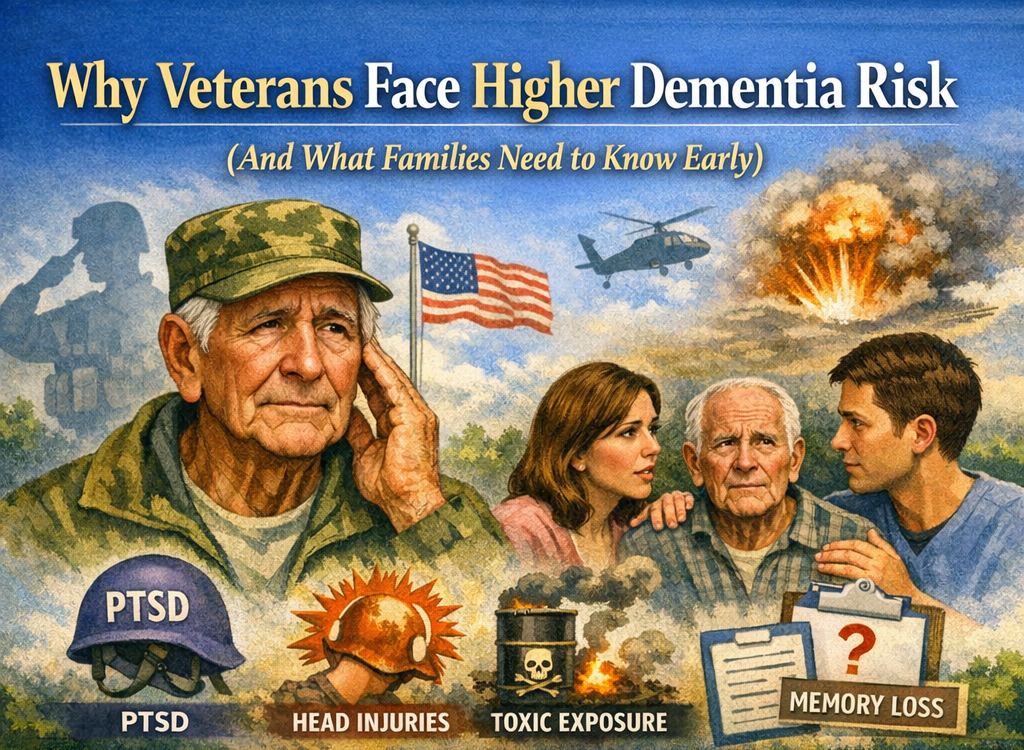
A Growing Concern for Veteran Families
When it comes to brain health, veterans face higher dementia risk than most people.
From traumatic brain injuries to chronic stress and environmental exposures, these experiences can significantly increase the likelihood of developing dementia later in life. With over 18 million veterans in the United States, this isn’t a small issue—it’s one that affects millions of families.
The good news? Awareness and early action can make a powerful difference.
Dementia vs. Alzheimer’s: What’s the Difference?
One of the most common misconceptions is that dementia and Alzheimer’s are the same thing—they’re not.
- Dementia is a general term for symptoms that affect memory, thinking, and behavior.
- Alzheimer’s disease is the most common cause of dementia, accounting for 60–70% of cases.
Other types include:
- Vascular dementia
- Lewy body dementia
- Frontotemporal dementia
- Mixed dementia (a combination of types)
Understanding this distinction is critical because identifying the cause of symptoms leads to better treatment and care planning.
Why Veterans Face Higher Dementia Risk
Veterans often face a combination of risk factors that compound over time.
1. Traumatic Brain Injury (TBI)
TBI is one of the leading injuries among service members. Research shows:
- Moderate to severe TBI increases dementia risk by 2 to 4 times
- Repeated mild TBIs can lead to long-term brain degeneration
These injuries can cause inflammation, neuron loss, and abnormal protein buildup in the brain.
2. Blast Exposure
Even without direct impact, blast waves can:
- Damage brain tissue at a microscopic level
- Disrupt the blood-brain barrier
- Trigger long-term inflammation
This type of exposure is extremely common in combat environments.
3. PTSD and Chronic Stress
Post-Traumatic Stress Disorder (PTSD) doesn’t just affect emotions—it affects the brain itself.
- Veterans with PTSD may have up to a 50% higher risk of cognitive decline
- Chronic stress increases cortisol, which damages brain structures over time
- It often leads to sleep disruption, which further accelerates brain decline
4. Sleep Disruption
Sleep is when the brain clears toxins and restores itself.
When sleep is consistently disrupted:
- Toxins build up in the brain
- Memory consolidation suffers
- Risk of dementia increases
Environmental Exposures in Deployment
Many veterans were exposed to harmful substances, including:
- Burn pits
- Diesel and jet fuel fumes
- Heavy metals and chemicals
- Pesticides and solvents
These neurotoxins can have long-term effects on brain health, especially when combined with other risk factors.
The Heart–Brain Connection
There’s a simple but powerful truth:
What’s good for the heart is good for the brain.
Veterans often experience higher rates of:
- Hypertension
- Diabetes
- Sleep apnea
- Tobacco use
These conditions increase the risk of vascular dementia, the second most common type of dementia.
Early Warning Signs You Shouldn’t Ignore
Dementia doesn’t look the same for everyone, but common signs include:
- Memory loss that disrupts daily life
- Confusion about time or place
- Difficulty completing familiar tasks
- Trouble finding words
- Changes in mood, behavior, or judgment
If these symptoms are interfering with everyday life, it’s time to seek medical evaluation.
Why Early Diagnosis Matters More Than Ever
Many people delay getting help—but early diagnosis can:
- Identify treatable or reversible conditions
- Slow disease progression
- Improve quality of life
- Allow families to plan ahead
- Provide access to medications and clinical trials
Simply put: The earlier you act, the more options you have.
A Hopeful Message for Veterans and Families
While the risks are real, this is not a hopeless situation.
Many contributing factors—like stress, sleep, and cardiovascular health—can be managed or improved. Even small lifestyle changes can make a meaningful difference over time.
Final Thoughts
If you’re noticing changes in a loved one—or even in yourself—don’t ignore them.
Start the conversation. Ask questions. Seek answers.
Because when it comes to brain health, early action isn’t just helpful—it’s powerful.