

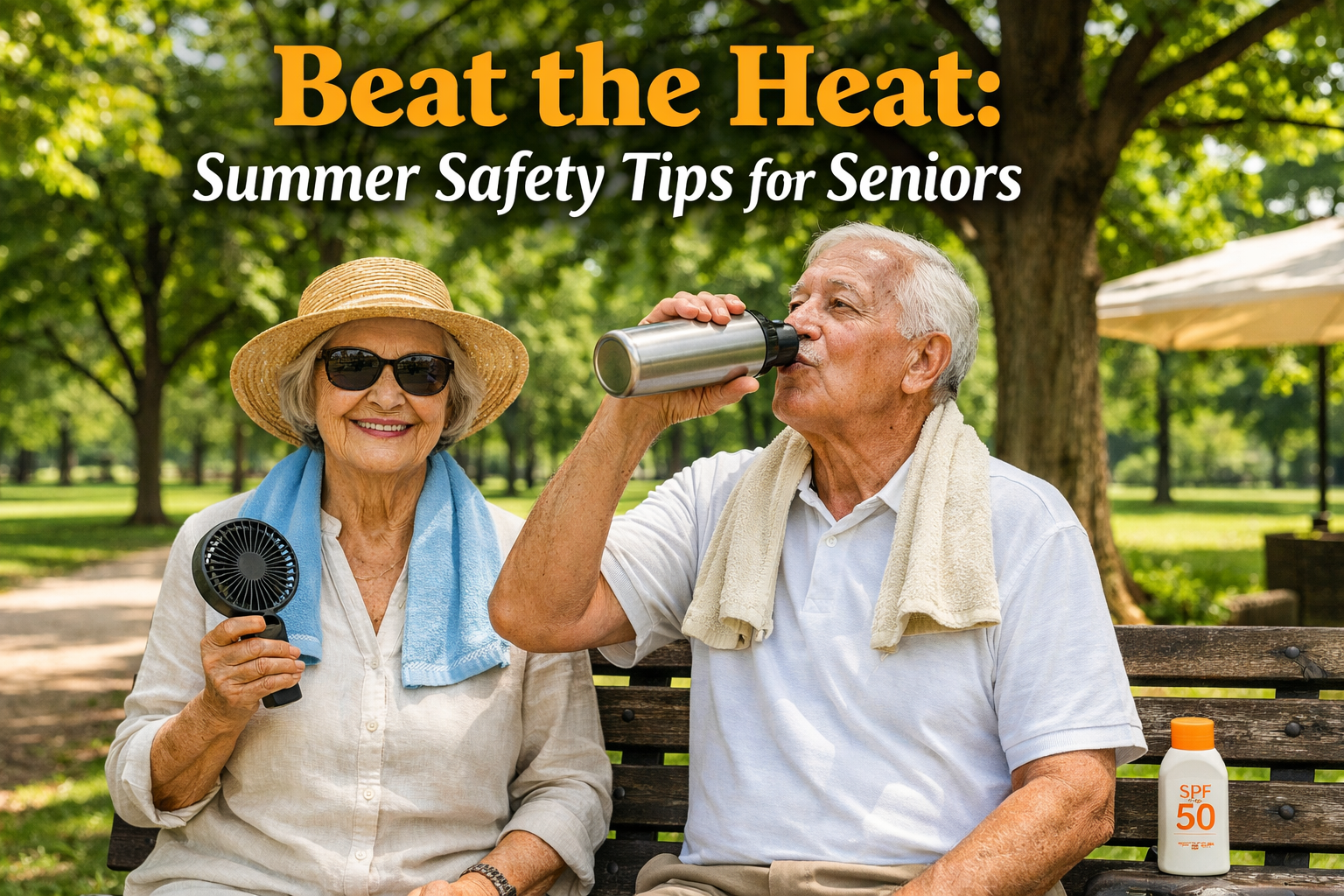
As temperatures soar during the summer months, Beat the Heat: Summer Safety Tips for Seniors becomes more than just a seasonal reminder—it’s essential advice for protecting older adults from dangerous heat-related illnesses. July is often one of the hottest months of the year, and seniors are at a greater risk due to age-related changes in the body, chronic health conditions, and certain medications. By taking a few simple precautions, seniors and their caregivers can enjoy the season while staying healthy, comfortable, and safe.
By taking a few simple precautions, seniors and their caregivers can enjoy the season while staying healthy and safe.
Recognizing the Signs of Heat Exhaustion and Heat Stroke
Heat-related illnesses can develop quickly and become dangerous if not addressed promptly.
Signs of Heat Exhaustion:
- Heavy sweating
- Weakness or fatigue
- Dizziness or lightheadedness
- Headache
- Nausea or vomiting
- Cool, pale, or clammy skin
- Muscle cramps
If these symptoms occur, move to a cool location, drink water, and rest immediately.
Signs of Heat Stroke:
Heat stroke is a medical emergency and requires immediate attention.
Symptoms include:
- Body temperature above 103°F
- Hot, red, or dry skin
- Rapid pulse
- Confusion or disorientation
- Slurred speech
- Loss of consciousness
If you suspect heat stroke, call 911 immediately.
Stay Hydrated Throughout the Day
Dehydration is one of the most common summertime health concerns for seniors. As we age, our sense of thirst often decreases, making it easier to become dehydrated without realizing it.
Helpful hydration tips include:
- Drink water regularly, even when you don’t feel thirsty.
- Keep a water bottle nearby throughout the day.
- Enjoy water-rich foods such as watermelon, cucumbers, oranges, and berries.
- Limit alcohol and excessive caffeine, which can contribute to dehydration.
Caregivers should encourage regular fluid intake and watch for signs of dehydration such as dry mouth, dark urine, fatigue, or confusion.
Be Aware of Medication Side Effects
Many commonly prescribed medications can increase sensitivity to heat or affect the body’s ability to regulate temperature.
Examples include:
- Diuretics (water pills)
- Blood pressure medications
- Antihistamines
- Certain antidepressants
- Some heart medications
If you or a loved one takes prescription medications, consult your healthcare provider or pharmacist about possible heat-related side effects and any special precautions that should be taken during hot weather.
Choose Safer Times for Outdoor Activities
Fresh air and exercise are important, but timing matters during the summer.
To avoid extreme heat:
- Schedule walks and outdoor activities before 10 a.m. or after 6 p.m.
- Wear lightweight, loose-fitting clothing.
- Use a wide-brimmed hat and sunscreen.
- Take frequent breaks in shaded or air-conditioned areas.
When temperatures or humidity levels are especially high, consider indoor activities such as walking at a shopping center, participating in senior programs, or exercising at home.
Keep Your Home Cool
A cool indoor environment can help prevent heat-related illnesses.
Ways to keep your home comfortable include:
- Use air conditioning whenever possible.
- Keep blinds and curtains closed during the hottest parts of the day.
- Use fans to improve air circulation.
- Avoid using ovens and other heat-producing appliances during peak afternoon hours.
- Check that air conditioning units are functioning properly before extreme heat arrives.
If your home becomes too warm, consider spending time at a local community center, library, senior center, or another air-conditioned public space.
A Safe Summer Starts with Awareness
Summer offers many opportunities to enjoy time with family and friends, but it’s important to take extra precautions when temperatures rise. Staying hydrated, recognizing the warning signs of heat-related illnesses, understanding medication risks, and keeping cool can help seniors remain healthy all season long.
At Skylark Senior Care, we are committed to helping older adults stay safe, active, and independent throughout the year. If you have questions about senior care services or would like additional support for a loved one, contact our team today.