

Click Here To Reserve Your Spot
Sometimes hope begins with recognizing that something has changed.
A veteran who once remembered every detail now struggles with names or appointments.
A spouse notices a change in mood, sleep, or behavior.
A family member sees increasing frustration, withdrawal, or difficulty concentrating.
A fellow veteran realizes that a friend just doesn’t seem like himself anymore.
These changes can be easy to overlook—or explain away.
“It’s just getting older.”
“It’s probably stress.”
“That’s just the way he is.”
But what if recognizing those changes could be the beginning of something better?
Hope Begins with Recognition.
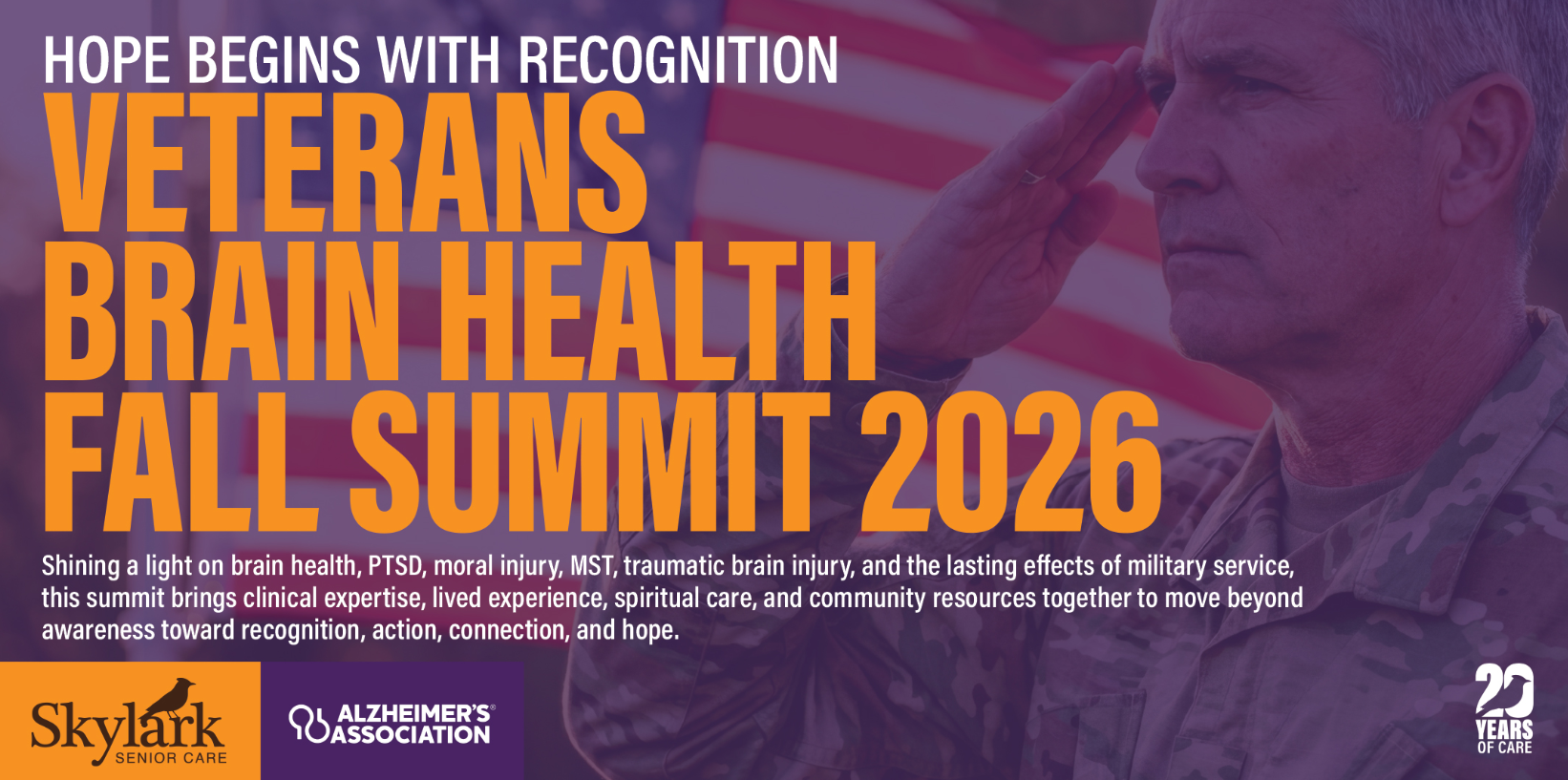
That is the powerful message behind the Veterans Brain Health Summit: Fall 2026, taking place Wednesday, October 14, 2026, at American Legion Post 201 in Alpharetta, Georgia.
Hope Begins When We Recognize the Signs
Military service can leave wounds that aren’t always visible.
Veterans may experience the lasting effects of post-traumatic stress, traumatic brain injury (TBI), moral injury, changes in cognition, anxiety, depression, sleep difficulties, and other challenges affecting brain health.
Some symptoms appear soon after service.
Others may not become noticeable until years—or even decades—later.
That’s why recognition matters.
Hope Begins with Recognition because you can’t address something you don’t recognize.
Recognizing a change doesn’t mean labeling someone.
It doesn’t mean admitting weakness.
And it certainly doesn’t mean giving up.
It means being willing to say:
“Something is different. Let’s find out why.”
That simple realization can open the door to understanding, professional evaluation, treatment, resources, and support.
Hope Begins with a Conversation
One of the most difficult things for veterans and their families can be starting the conversation.
A veteran may not want to talk about changes they’re experiencing.
A spouse may be afraid of offending their husband or wife.
An adult child may wonder whether what they’re seeing is simply part of aging.
A friend may hesitate to say anything at all.
But sometimes the most caring thing we can do is simply ask:
“How are you really doing?”
The Veterans Brain Health Summit is designed to help start those conversations.
Hope Begins with Recognition—and recognition often begins with listening.
The Summit brings together veterans, families, healthcare professionals, veteran-serving organizations, caregivers, and community leaders to talk openly about brain health and the challenges many veterans face.
Understanding PTSD, TBI and Moral Injury
For many veterans, brain health cannot be separated from their military experiences.
Traumatic brain injury can affect memory, attention, thinking, emotions, and everyday functioning.
PTSD can affect relationships, sleep, concentration, mood, and a person’s ability to feel safe even after leaving the battlefield.
Moral injury can involve the emotional and psychological impact of experiences that conflict with deeply held beliefs about right and wrong.
These issues can overlap.
They can be complicated.
And they can be misunderstood.
That’s why Hope Begins with Recognition.
When veterans and their families understand that these challenges can have legitimate psychological and neurological components, they may be more willing to seek help—and more prepared to find the right kind of help.
Hope Begins with Knowing Where to Turn
Recognition is important.
But recognition alone isn’t enough.
The next question is:
“What do we do now?”
That’s where education and resources become so important.
The Fall 2026 Summit will provide an opportunity to learn about evidence-based approaches, rehabilitation, cognitive health, recovery, and resources available to veterans and their families.
Attendees will hear from professionals who work directly with veterans as well as from someone who understands military service from personal experience.
Dr. Anastacia A. Nichols
Dr. Anastacia A. Nichols is an Assistant Professor in the Department of Rehabilitation Medicine at Emory University School of Medicine and serves as Director of Cognitive Rehabilitation Therapy within the Division of Rehabilitation Neuropsychology.
She is also Director of Neuropsychology for the Emory Healthcare Veterans Program.
Her work with veterans and service members experiencing mild TBI and co-occurring psychiatric conditions provides an important clinical perspective on the connection between brain health, PTSD, cognition, recovery, and treatment.
Her presentation will explore these issues while highlighting evidence-based treatment and resources available through the Emory Healthcare Veterans Program.
Because Hope Begins with Recognition—and recognition is much more powerful when it is followed by knowledge.
Sgt. Maj. (Ret.) William Skiles
Sgt. Maj. William Skiles brings a very different, but equally important, perspective.
A 30-year veteran of the United States Marine Corps, he served in combat in Fallujah and held leadership positions involving ethics, critical thinking, judgment, decision-making, cohesion, service, and sacrifice.
Before retiring, he taught ethical behavior for the Commandant of the Marine Corps and developed the Marine Corps’ first Sergeants Major Course.
His experience offers a powerful reminder that recognizing changes in ourselves—or in someone serving beside us—isn’t a sign of weakness.
It is part of looking after one another.
Hope Begins with Recognition because sometimes the person who recognizes the change first can be the person who makes a difference.
Hope Begins with Family
Brain health doesn’t affect just one person.
It affects families.
It affects marriages.
It affects friendships.
It affects the people who served alongside us.
A veteran may be struggling, but the spouse may be struggling too.
An aging veteran may need assistance, while an adult child is trying to understand what is happening.
A caregiver may be searching for answers and wondering where to begin.
That’s why the Summit isn’t only for veterans.
It’s for the people who care about them.
Hope Begins with Recognition when families learn to recognize the signs, start the conversation, and discover that help is available.
You don’t have to diagnose a loved one.
You don’t have to have all the answers.
You simply have to be willing to notice.
And then take the next step.
Hope Begins When a Community Comes Together
The Veterans Brain Health Summit is also a reminder that supporting veterans is a community responsibility.
The event brings together organizations and individuals committed to serving veterans, military families, caregivers, and the community.
Skylark Senior Care is presenting the Summit in collaboration with the Emory Healthcare Veterans Program and the Alzheimer’s Association, along with organizations dedicated to supporting veterans and military families.
This kind of collaboration matters.
Because no veteran—or family—should have to navigate brain-health challenges alone.
Hope Begins with Recognition.
And hope grows when a community says:
“We’re here. We see you. And we’re ready to help.”
Join Us: Hope Begins with Recognition
The Veterans Brain Health Summit: Fall 2026 — Hope Begins with Recognition will be held:
Wednesday, October 14, 2026
11:00 a.m. – 2:00 p.m.
American Legion Post 201
201 Wills Road
Alpharetta, GA 30009
Doors open at 10:00 a.m. for networking and visits to resource tables.
A free boxed lunch will be provided, and individual registration is required.
Whether you are a veteran, spouse, family member, caregiver, healthcare professional, veteran advocate, or simply someone who wants to better understand the challenges facing those who have served our country, this Summit offers an opportunity to learn, connect, and discover resources.
Because Hope Begins with Recognition.
Recognition that something has changed.
Recognition that a veteran may need support.
Recognition that families don’t have to figure everything out alone.
Recognition that resources and treatment are available.
Recognition that asking for help isn’t weakness.
And recognition that the first step toward hope may simply be noticing that someone needs it.
Join us for the Veterans Brain Health Summit Fall 2026.